
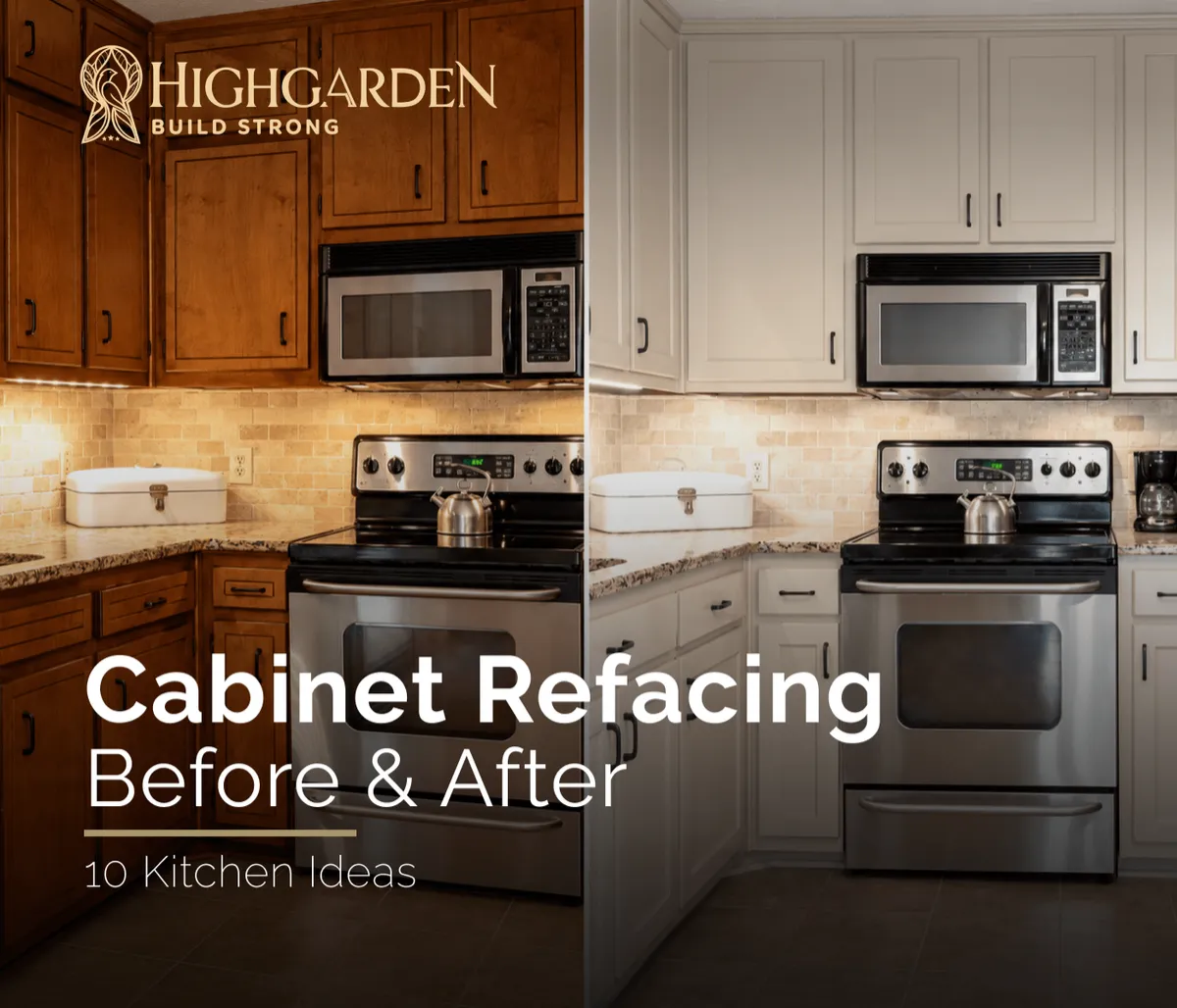
Cabinet Refacing Before and After: 10 Kitchen Makeover Ideas
A dated kitchen doesn't always need a complete renovation to feel new again. Sometimes, changing the cabinet doors, finishes, and hardware is enough to transform the entire room. That's what makes cabinet refacing before-and-after transformations so appealing.
Imagine replacing heavily detailed oak doors with clean Shaker fronts, turning dark cabinets into a warm, inviting design, or introducing natural wood finishes without rebuilding the existing kitchen.
Cabinet refacing can make these changes possible while keeping structurally sound cabinet boxes in place. But not every cabinet is a good candidate, and not every dramatic kitchen makeover can be achieved through refacing alone.
Below, we explore 10 kitchen cabinet refacing ideas, explain which improvements create the biggest visual impact, and help you decide which options might work in your home.
About the images: The photographs in this guide are third-party design inspiration, not before-and-after pairs and not completed HighGarden Builder projects. They illustrate cabinet styles and finishes that may be achievable through refacing where cabinet construction permits.
What Can Cabinet Refacing Actually Change?
Cabinet refacing transforms the visible appearance of existing cabinets by replacing the doors and drawer fronts and updating exposed cabinet surfaces while preserving the original cabinet boxes.
Depending on the construction, refacing can change the cabinet door style, door and drawer-front colors, exposed frame finishes, visible end panels, hardware, and selected moldings. What generally stays the same is the underlying cabinet box, size, and layout.
This distinction matters when looking at kitchen before-and-after photos. If a photographed project also includes moving appliances, changing countertops, or removing walls, those changes go beyond basic refacing.
10 Cabinet Refacing Before-and-After Ideas Worth Exploring
1. Honey Oak Cabinets to Warm White Shaker Doors

Design inspiration: Warm white Shaker cabinets and brass hardware. Photo: GoodLifeConstruction / Unsplash. Not a documented refacing before-and-after.
Before: Orange-toned oak cabinets, decorative raised-panel doors, and traditional hardware make a kitchen look visually dated.
After: Warm white Shaker doors, matching exposed cabinet surfaces, and restrained hardware give the same layout a cleaner, more balanced appearance.
Shaker doors have a recessed center panel surrounded by a simple frame. That profile works particularly well in transitional kitchens because it has architectural character without excessive ornamentation. Consider a soft off-white or cream finish that coordinates with existing wood flooring and natural light rather than defaulting to bright white.
What changes: Replacement doors and drawer fronts, coordinated exposed-frame finishes, and hardware. Structurally sound cabinet boxes can remain.
2. Dark Cherry Cabinets to Modern Greige

Design inspiration: Greige cabinetry with warm metal detailing and a wood-tone island. Photo: Puscas Adryan / Unsplash. Not a documented refacing before-and-after.
Before: Deep reddish-brown cherry cabinetry, ornate profiles, and dark countertops create a heavy, formal appearance.
After: Soft greige cabinet fronts and simpler door styles create a calmer, transitional kitchen. Greige combines gray and beige undertones, making it flexible with many natural-stone counters and wood floors.
The key is choosing undertones that suit materials you intend to keep. A warm greige may work better with traditional granite than a cool gray. Actual samples should be reviewed inside the kitchen under daytime and evening lighting.
Best suited for: Traditional kitchens with sound cabinetry and existing stone or tile finishes that are staying.
3. Outdated Wood Cabinets to Natural White Oak

Design inspiration: Warm natural-wood cabinetry. Photo: GoodLifeConstruction / Unsplash. Not a documented refacing before-and-after.
Before: Yellow-orange cabinet finishes make the room feel dated or disconnected from a more modern home.
After: Natural oak-style doors, matching veneer on visible frames where suitable, and understated handles introduce warmth and texture without relying on another painted finish.
A refacing design may use new wood doors plus compatible veneer on exposed cabinet surfaces. Matching wood grain, color, finish, and sheen across all visible components requires careful material selection. Natural wood varies, so examine real samples.
Design tip: Consider wood tones in relation to the flooring, since multiple unrelated wood colors can compete visually.
4. All-White Cabinets to a Two-Tone Kitchen

Design inspiration: Contrasting white and blue cabinet finishes. Photo: Alex Tyson / Unsplash. Not a documented refacing before-and-after.
Before: An all-white kitchen looks visually flat despite functional cabinetry.
After: Light upper cabinets are paired with muted navy, charcoal, sage, or wood-tone lower cabinets to introduce contrast and define the room.
Refacing makes it possible to change door and drawer-front finishes, but exposed cabinet faces and end panels must coordinate. A two-tone plan should also complement the countertop and floor colors, especially when those elements are not being replaced.
What to watch: Check how two different cabinet colors will meet at corners, pantries, and tall units. Use a consistent hardware language.
5. Ornate Raised-Panel Cabinets to Contemporary Slab Doors

Design inspiration: Streamlined cabinetry and minimalist proportions. Photo: Caroline Badran / Unsplash. Not a documented refacing before-and-after.
Before: Heavily ornamented doors create visual clutter even after repainting.
After: Flat slab doors create simpler lines and a more contemporary appearance, with painted or wood-look finishes and restrained hardware.
Changing the door profile is one of refacing's advantages over painting. However, full-overlay looks and concealed hinges need compatible box construction, correct measurements, and suitable door clearance. A modern finish alone does not guarantee that every existing cabinet can support the same door configuration.
The biggest visual change: The door geometry, rather than the color alone.
6. Worn Cream Cabinets to Sage Green

Design inspiration: Green cabinetry and updated hardware. Photo: Janay Peters / Unsplash. Not a documented refacing before-and-after.
Before: Worn cream or white doors show chips, discoloration, and aging finishes.
After: Muted sage-green cabinet fronts and coordinated frame finishes create a softer, nature-inspired palette. Warm metal hardware can add contrast without overpowering the room.
Choose the right undertone for your kitchen: some greens lean blue and cool, while others are earthy and warm. Test colors next to existing countertops and tile. If the boxes have swelling or water damage, address the underlying problem before considering cosmetic work.
Design consideration: A sage finish often works well with natural wood, cream tile, and warm neutral walls.
7. Traditional Cabinets to a Modern Black-and-Wood Combination

Design inspiration: Matte dark finishes balanced with natural wood. Photo: krishna kumar c / Unsplash. An interior-design rendering, not a documented refacing project.
Before: Medium-brown traditional cabinet fronts appear dated or too uniform.
After: Charcoal-black lower doors or an accent island paired with lighter wood fronts creates a contemporary, balanced palette.
In a kitchen with limited daylight, consider reserving dark finishes for lower cabinets and allowing lighter materials to dominate above eye level. Select countertops, backsplash, and lighting together with the cabinet finishes so the black elements do not feel visually heavy.
Best suited for: Homeowners who want a modern or transitional appearance and have adequate room lighting.
8. Dated Kitchen Island to a Statement Feature

Design inspiration: A kitchen island treated as a prominent design feature. Photo: Franco Debartolo / Unsplash. Not a documented island-refacing before-and-after.
Before: A prominent island has dated doors, inconsistent side panels, and decorative trim that no longer matches the room.
After: Updated doors, panels, hardware, and selected trim create a more intentional focal point, potentially in a contrasting finish.
An existing island can often be refreshed cosmetically if the boxes are sound, but increasing its footprint, adjusting a seating overhang, or moving electrical or plumbing elements would involve additional remodeling work.
The takeaway: Make an existing island a focal point without assuming every change is basic refacing.
9. Heavy Upper Cabinets to a Lighter, More Open Look

Design inspiration: Light cabinets and layered lighting create an airier appearance. Photo: GoodLifeConstruction / Unsplash. Not a documented refacing before-and-after.
Before: Dark or heavily decorated upper cabinets make a kitchen feel crowded.
After: Lighter door finishes, simpler profiles, and carefully selected glass-front doors can create an airier look without necessarily relocating cabinet boxes.
Removing cabinets or installing open shelves is different from basic refacing. If preserving storage matters, start by exploring lighter door profiles and coordinating the cabinet finish with wall color and task lighting.
Design tip: Light upper finishes can reduce visual weight while darker lower cabinets anchor the space.
10. Mismatched Cabinet Finishes to a Cohesive Kitchen
Before: Cabinets updated at different times have inconsistent colors, door profiles, and hardware.
After: One coordinated door style, a limited finish palette, consistent hardware, and thoughtfully finished end panels unify the room.
The challenge is determining whether cabinet boxes of different ages and manufacturers can accept compatible doors and finishes. Some differences can be corrected through refacing and finish carpentry; others may require replacing selected boxes.
The transformation: Visual consistency rather than additional ornament.
Which Cabinet Refacing Style Is Right for Your Kitchen?
Existing Kitchen | Transformation to Consider | Desired Effect |
|---|---|---|
Orange-toned oak cabinets | Warm white Shaker | Lighter, timeless appearance |
Dark cherry cabinetry | Soft greige | More relaxed, transitional look |
Outdated wood-tone cabinets | Natural oak veneer and doors | Warmth and texture |
Monochromatic white kitchen | Two-tone cabinetry | Contrast and visual interest |
Ornate raised-panel doors | Flat-panel doors | Cleaner, contemporary lines |
Worn cream cabinets | Muted sage green | Softer, nature-inspired palette |
Dark traditional cabinetry | Black-and-wood combination | Modern contrast |
Dated island cabinetry | Accent finish and updated panels | Stronger focal point |
Visually heavy upper cabinets | Lighter finishes and selected glass fronts | More open appearance |
Inconsistent cabinet finishes | Coordinated doors and surfaces | Cohesive overall design |
These are aesthetic ideas rather than promises that every existing cabinet configuration can support them. Before selecting finishes, check cabinet structure, dimensions, door overlays, and material suitability.
How to Evaluate Cabinet Refacing Before-and-After Photos
Before-and-after galleries can help you see what is possible, but they can mislead if the full renovation scope is unclear.
Compare the same camera angle. Check whether the countertops, windows, and appliance positions remain the same. Matching angles help reveal which changes came from the cabinetry.
Look beyond the cabinet color. Notice door profiles, exposed end panels, drawer fronts, hardware, and alignment. Painting the existing doors is not the same as refacing them.
Identify other upgrades. New countertops, appliances, backsplashes, and lighting often account for a large part of a dramatic renovation photo. They are not normally included in standard cabinet refacing.
Inspect the finishing details. Close-up images of hinges, cabinet ends, door gaps, and surface edges can reveal craftsmanship that an overall shot may not show.
For documented third-party projects, see Houzz's examples of kitchens transformed by refaced cabinets. Those are not HighGarden Builder projects.
Before You Commit: Five Questions to Ask
Are the cabinet boxes worth keeping? Look for moisture damage, unstable joints, loose frames, or other structural problems.
Does the layout work? New doors won't improve cramped walkways, inadequate preparation areas, or poor appliance placement.
Will the countertops and backsplash stay? Choose cabinet colors and materials alongside existing permanent finishes.
Can the boxes support the new doors? Verify door overlays, hinge compatibility, dimensions, and adjacent clearances.
Would new cabinetry provide better long-term value? When existing cabinets are unsuitable, replacement may be more practical.
Cabinet Refacing Ideas for Older Homes in Newton and Greater Boston
In Newton, Wellesley, Needham, Brookline, and neighboring Greater Boston communities, kitchen cabinets may be surrounded by original wood flooring, detailed trim, irregular walls, or finishes from different renovation periods.
For traditional homes, natural wood, warm white Shaker fronts, and understated raised-panel profiles may work with existing architectural character. Modern renovations may benefit from slab doors and a more restrained palette. Neither is universally the right answer.
Older cabinet boxes should be checked for previous repairs, moisture damage, and suitability for the chosen refacing system. Where work disturbs painted surfaces in pre-1978 homes, applicable lead-safe renovation requirements should also be considered. Review the Massachusetts lead-safe renovation guidance before planning such work.
What If Cabinet Refacing Isn't Enough?
Refacing may be the right solution when the cabinet structure is sound and the existing kitchen works well. But it cannot solve every problem.
When cabinets are damaged, storage is inadequate, or circulation needs improvement, replacing cabinets may provide greater design flexibility. A complete kitchen remodel can also coordinate new cabinetry with flooring, lighting, countertops, and finish carpentry.
HighGarden Builder offers kitchen remodeling and cabinet installation services for homeowners in Newton and Greater Boston. Its existing service offering should not be confused with a separately verified refacing service.
Frequently Asked Questions
Can cabinet refacing make old cabinets look new?
Yes. New doors, drawer fronts, and updated visible surfaces can significantly change the appearance of sound existing cabinetry. However, the original boxes remain and must be suitable for continued use.
Can oak cabinets be transformed into white Shaker cabinets?
Often, yes. New Shaker doors, matching finish materials for frames and exposed sides, and updated hardware can achieve a different look where the existing cabinet structure supports the installation.
Is refacing better than painting for a dramatic cabinet makeover?
Refacing offers greater flexibility when you want a different door profile as well as a new color. Painting can be sufficient when you like the original door design and the surfaces are sound.
Can I have two-tone cabinets with refacing?
Often, yes. Upper and lower doors can use contrasting finishes, provided visible cabinet surfaces and panels are appropriately coordinated and suitable materials are available.
Does cabinet refacing include countertops?
Not ordinarily. Countertops, backsplashes, lighting, and flooring are separate improvements unless included in a broader quoted project scope.
Can every kitchen cabinet be refaced?
No. Damaged cabinet boxes, unsuitable substrates, incompatible dimensions, and major layout limitations may make cabinet replacement a better choice.
How much does a cabinet refacing makeover cost?
Costs vary by the number and type of doors and drawers, existing cabinet condition, selected finishes, and labor. Request a project-specific quote and compare it with alternatives before committing.
Ready to Plan Your Kitchen Upgrade?
The most successful cabinet transformation is one that improves the kitchen without preserving problems that should be fixed. New doors and finishes can create a striking difference when the cabinet boxes and layout are worth keeping; new cabinetry can offer more flexibility where they're not.
HighGarden Builder helps homeowners in Newton and Greater Boston with cabinet installation, kitchen remodeling, and coordinated interior improvements.
Explore Kitchen Remodeling Services or Request a Project Consultation.
